Let’s skip the tech-bro buzzwords
for a second. If you manage a bustling ecommerce storefront, an IT helpdesk, a
real estate portfolio, or a heavy-duty construction site, you’ve probably felt
the whiplash. One month, everyone is talking about basic chatbots; the next,
the goalposts have shifted entirely to agentic workflows, complex vector
stores, and custom local models.
The reality? Most off-the-shelf AI
tools hit a brick wall the moment they encounter messy, proprietary real-world
data. Generic models don't know the exact zoning laws for a commercial property
in downtown Austin, they stumble over custom SKU hierarchies in e-commerce, and
they can't interpret architectural blue-prints.
To bridge the gap between
experimental AI demos and revenue-generating infrastructure, engineering teams
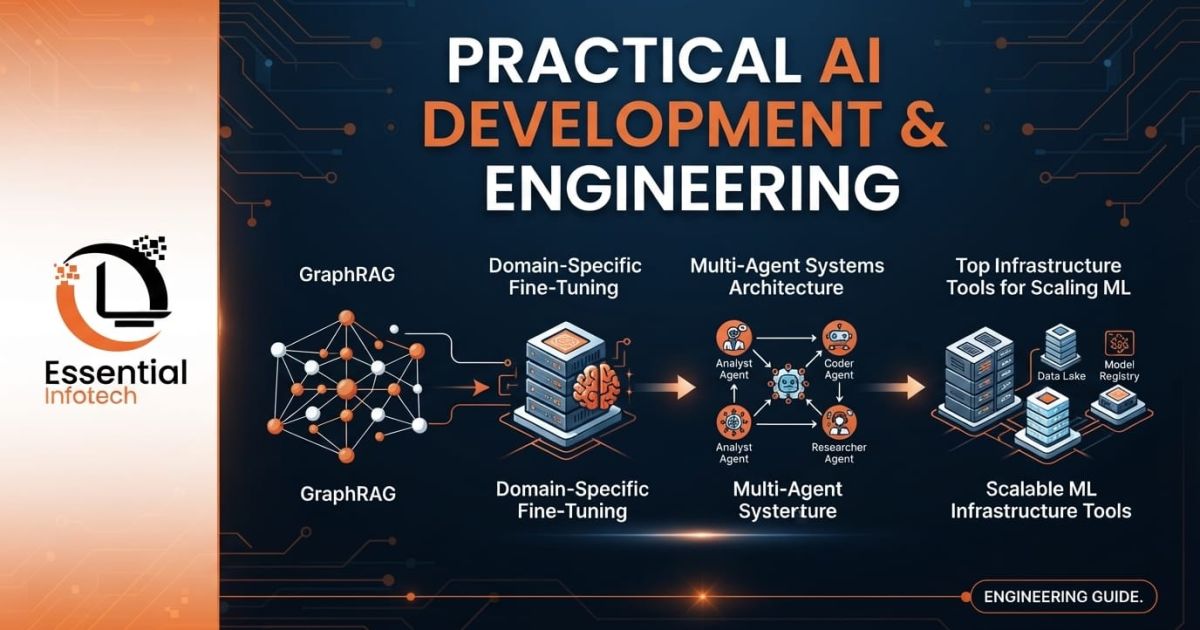
are focusing on four pillars: GraphRAG, Domain-Specific Fine-Tuning,
Multi-Agent Systems, and Scalable ML Infrastructure.
Traditional Retrieval-Augmented Generation (RAG) is
great until it isn't. If you toss thousands of pages of unstructured
documents—like construction contracts, property leases, or multi-vendor supply
agreements—into a standard vector database, it chops them into isolated text
chunks. Ask a nuanced question, and the system often misses the hidden
connections between entities.
·
The Fix: GraphRAG combines vector search with knowledge graphs.
Instead of just matching keywords or semantic vectors, it maps relationships
between people, locations, dates, and contractual obligations.
·
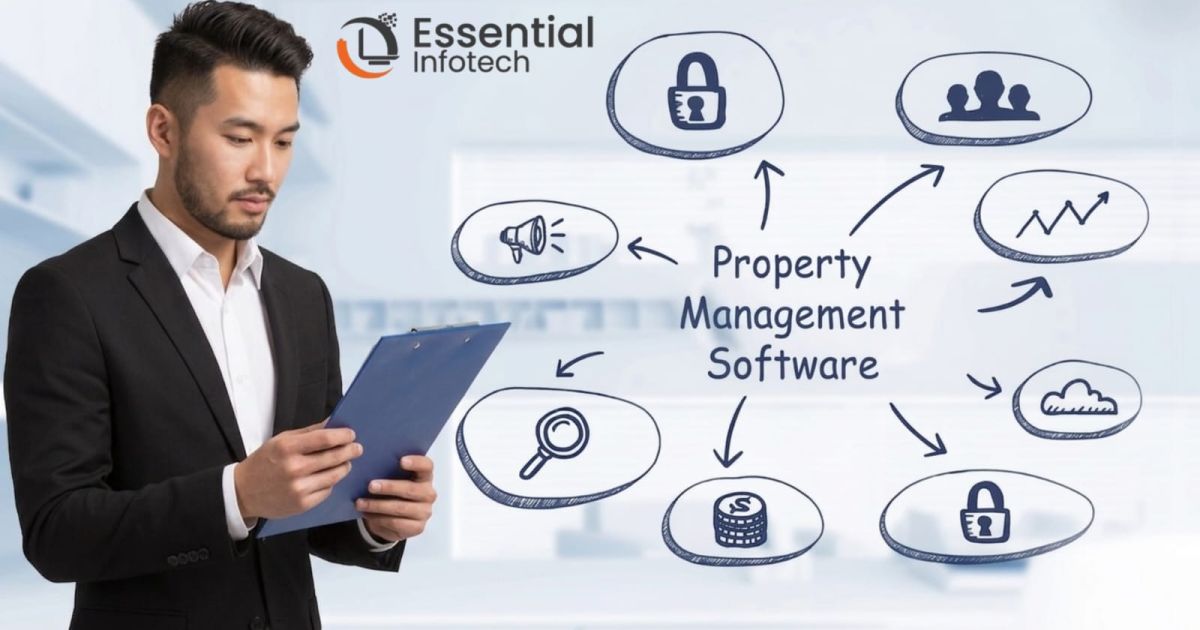
Real-World Impact: Imagine a real estate or property
management firm managing a multi-million-dollar portfolio. A traditional search
might find a single clause about maintenance liabilities. A GraphRAG setup
traces how that clause interacts with local municipal codes, vendor history,
and tenant leases across an entire portfolio in seconds.
·
Pro-Tip for SEO & Content: When writing technical
documentation or case studies on this, target long-tail search terms like "implementing knowledge
graphs for enterprise LLM retrieval" rather than generic queries. Link
out to foundational frameworks on
Public foundational models are jacks-of-all-trades and
masters of none. If you feed an unoptimized model architectural terminology or
complex IT infrastructure specs, it tends to hallucinate plausible-sounding
nonsense.
·
The Strategy: Fine-tuning open-source powerhouses
(like Meta’s Llama or Mistral architectures) on curated, proprietary datasets.
·
The Application:
o Ecommerce: Training a
model on historical catalog metadata, customer inquiries, and localized buying
behaviors to power hyper-accurate, context-aware product discovery.
o Construction &
Engineering: Fine-tuning models on safety logs, OSHA compliance guidelines,
and blueprint annotations to flag potential worksite hazards automatically.
·
The Operational Reality: Fine-tuning requires clean
data pipelines—something many companies struggle to maintain internally. This
is precisely where specialized technical partners add massive value. For instance, organizations looking to fast-track these
implementations often collaborate with specialized teams like [
We are moving away from the era of the single,
monolithic AI prompt that tries to do everything. Modern production
architectures rely on Multi-Agent
Systems (MAS), where specialized AI agents collaborate, argue, hand off
tasks, and verify each other's work.
"Think
of a multi-agent system less like a single super-worker and more like a tightly
coordinated digital startup team: one agent writes the code, another reviews it
for security vulnerabilities, and a third formats it into user-facing
documentation."
·
How It Works in IT & Operations: An incoming
support ticket triggers a triage agent. If it’s a network infrastructure
glitch, it passes the context to a diagnostic agent. If it requires human
intervention, it structures the log data neatly for an engineer.
·
The Architecture Stack: Frameworks like AutoGen or
CrewAI are making it easier to orchestrate these loops, though maintaining
deterministic guardrails in non-deterministic environments remains the primary
engineering hurdle.
You can have the most brilliant fine-tuned model and
multi-agent workflow in the world, but if your infrastructure buckles under
concurrent traffic spikes, your users will bounce. Scaling ML efficiently
requires a modern stack:
·
Vector Databases: Tools like Pinecone, Milvus, and
Qdrant optimized for sub-millisecond similarity searches at scale.
·
Inference Servers: Moving away from heavy, unoptimized
Python scripts to high-performance runtimes like vLLM or TensorRT-LLM to
maximize GPU throughput and slash cloud compute bills.
·
Orchestration & Monitoring: Utilizing tools like
Arize or Phoenix for real-time LLM observability, tracking everything from
token latency to semantic drift.
Building and maintaining this level of infrastructure
requires specialized, cross-functional talent that can be difficult and
expensive to hire locally. This is where Essential Infotech bridges the gap for
industries like ecommerce, real estate, IT, and construction.
Rather than treating AI as a standalone gimmick,
Essential Infotech integrates advanced software development, machine learning
pipelines, and robust back-office workflows into a cohesive ecosystem. Whether
it's setting up custom GraphRAG architectures for property management
databases, cleaning and annotating complex industry datasets for fine-tuning,
or streamlining enterprise software deployment, they provide the technical
muscle needed to turn raw data into a reliable competitive advantage.
By
combining technical execution with reliable IT-enabled business services,
companies can bypass the growing pains of AI adoption and focus squarely on
scaling their core operations.
Traditional Retrieval-Augmented Generation (RAG) splits
text documents into isolated chunks stored in a vector database, which often
misses deep contextual links. GraphRAG
combines vector search with knowledge graphs to map explicit relationships
between entities, data points, and complex structures (like legal contracts or
property portfolios), providing much higher accuracy for nuanced queries.
Public foundational models lack industry-specific
context, leading to hallucinations when handling complex jargon like
architectural schematics, e-commerce SKUs, or IT infrastructure specs. Domain-specific fine-tuning
customizes open-source models using proprietary enterprise data, resulting in
precise, safe, and context-aware outputs tailored to your exact business niche.
Instead of relying on a
single, monolithic AI prompt to handle complex processes, Multi-Agent Systems (MAS) break
workflows down among specialized digital agents. One
agent might triage an IT support ticket, another diagnoses the network
infrastructure, and a third compiles data logs, mimicking a coordinated team to
minimize errors and automate multi-step operations.
Essential
Infotech bridges the gap between raw data and practical implementation
by providing advanced software development, custom data annotation pipelines,
and robust IT-enabled services.










We Are A Leading IT Company Experienced In Creative And Innovative Development And Design Solutions .

We are a leading IT company experienced in innovative development and design solutions. We have a unique, out-of-the-box approach to cope with custom clients' needs and demands. Success is essential to your business; so are we!
© 2023 All Rights Reserved by Essential-Infotech